мои коллеги, включая дев менеджера, так меня сегодня задолбали, что я считал минуты до времени "ч", по наступлению которого я прыгнул и погнал на горку дорога была сухая, меня провожали закаты на горке было тепло и малолюдно. погонял сам, взял студентке и погонял с ней. ещё немного и наши уроки станут больше катанием, чем накатыванием. под конец урока (третьего!) мы перебрались на синюю горку
а потом я погонял самостоятельно, вытряхивая из себя всю сегодняшнюю бюрократию а ещё на нас опять спустили кучу ежегодных курсов, не снимая плана выработки
Do you wish to know [when] that day is coming? Watch money. Money is the barometer of a society’s virtue. When you see that [commerce is conducted], not by consent, but by compulsion—when you see that in order to produce, you need to obtain permission from men who produce nothing—when you see that money is flowing to those who deal, not in goods, but in favors—when you see that men get richer by graft and by pull than by work, and your laws don’t protect you against them, but protect them against you–when you see corruption being rewarded and honesty becoming a self-sacrifice—[then] you may know [that day has arrived]…
For most of America, the headlines trumpeting a “strong economy” and “stocks at record highs” land like a cruel joke.Michael W. Green’s recent series My Life Is A Lieattempted to quantify the economic devastation felt by the majority of the country these many years. This carnage has been sanctified by our technocrats—an Aztec priesthood invoking sacred economic statistics as celestial omens to justify the ritual sacrifice of society on the altars of GDP and the S&P 500.
Green, an investment industry insider, gave voice to the Forgotten Man:
Predictably, the priesthood declared heresy. Economists, journalists, thought leaders, think tanks, and other fellow travelers circled the wagons, tearing apart Green’s numbers, splitting hairs, and nitpicking his methodology.
That is a grave mistake.
Fiddling While Rome Burns
How can you expect a man who’s warm to understand a man who’s cold?
—One Day in the Life of Ivan Denisovich, Alexander Solzhenitsyn
This sort of wonkish debate—whether the poverty line is $30k or $140k, whether CPI is 2% or 4%—exemplifies the scientism enabling our national dissolution: the religious belief that the statistical map is more real than the economic territory. Perhaps such effete technocratic sophistry could be tolerated—even indulged—were the body politic unified. But it is a fatal conceit in such a Balkanized powder keg of a nation.
Into this highly combustible environment, Green’s essays landed like an errant spark. If nothing else, Green forced a long-overdue reckoning with a reality that the credentialed class has steadfastly refused to acknowledge: that they themselves have spent decades drowning the American Dream in a flood of ruinous policy, even as they now insist that the water level is perfectly fine and that Americans are simply bad swimmers.
Such an acknowledgment, however, would be tantamount to confessing that their entire worldview—the long Postwar Consensus—rests on a meticulously constructed lie. That the intellectual facade of modern finance and economics, the modern monetary system and central banking, fiscal and monetary policy, financialization, globalism—all of it—has strip-mined the nation and fracked the American bedrock, leaving behind a slag heap of poverty, misery, and rage in place of the prosperity it promised.
That their own lives have been a lie.
From Picket Fences To Shoebox Micro-Apartments
The party told you to reject the evidence of your eyes and ears. It was their final, most essential command.
—Winston Smith
Whether Green’s numbers withstand academic scrutiny is altogether beside the point. His essays struck such a visceral nerve because Green—as someone with institutional investment credentials—put numbers to what millions have experienced firsthand for decades. And he did so at precisely the moment when their long-simmering rage is boiling over.
If Green’s essays were a stray spark drifting toward the powder keg, these revelations of fraud represented a blazing torch hurled straight at it. Billions have been bled from the American middle class—those who can barely afford their own children—to bankroll the imaginary children of fraudsters.
But the scale of the plunder extends far beyond one state:
The populace’s rage, therefore, springs from a well far deeper than Green’s economic statistics—or any one else’s, for that matter—could ever fully plumb. Understanding this fury—and its implications for both our civilization and our portfolios—requires returning to an existential question we posed five years ago: how did we devolve from the society depicted in the New Yorker’s 1957 Christmas cover (left) to that depicted in its 2020 Christmas cover (right)?
These two contrasting images—set six decades apart—bear witness to a birthright betrayal so absolute that it defies measurement. The transformation seems inconceivable: in the course of a single lifetime, how did the most prosperous civilization in history come to cannibalize its children’s futures?
Asked differently, how could prior generations buy houses, raise families, and afford healthcare on a single income—and then retire—while younger generations drown in debt, face bleak job prospects, are cursed to rent forever, risk financial ruin from hospital visits, and accumulate pets rather than rear children?
Why do so many feel worse off than even a decade ago, despite record asset prices and strong GDP growth? And why has this malignancy metastasized simultaneously throughout the Western world—the US, Europe, Canada, Australia?
The answers won’t be found in economic textbooks, models, and policy papers that led us here in the first place. Nor will they emerge from the clerisy who authored them:
But answer these questions, and the chaos of our age suddenly resolves into clarity: not only the financial stress, but the seething rage erupting across Western nations worldwide. The collapse not merely of institutional trust, but of societal trust writ large. The rise of populism and politically motivated violence. The pervasive sense that the very fabric of civilization—if not reality itself—is being torn apart at the seams. The gnawing feeling shared by ordinary people that they are struggling to survive a precarious interlude before some major cataclysm strikes.
Mr. Market’s Schizophrenic Break Of 2020
The madness of the 2020-2021 COVID era was apocalyptic—literally a lifting of the veil: governments induced a global economic coma yet asset prices—the economy’s vital signs—registered euphoric highs. It was as if a comatose patient’s monitors indicated an Olympic athlete in peak condition—the clearest illustration of what Green is now attempting to quantify.
Meme stocks, fake currencies, and bankrupt companies—indeed all assets—went parabolic even as the economy flatlined.
We call this period Mr. Market’s Schizophrenic Break, the absurdity of which was perhaps best encapsulated by David Portnoy (aka “Davey Day Trader”) picking stocks out of a scrabble bag on Twitter and CNBC—a strategy that consistently worked!
Portnoy himself saw through this surreal facade during the height of the COVID market mania:
The good news is I know it’s rigged. The government is [saying] don’t worry we’re just gonna create a trillion-billion-zillion dollars. It’s fantasy land. It’s Schrute Bucks [fake money from a popular TV show]. It’s the worst coronavirus day in a while and the government is saying don’t worry about it cause we’re gonna print a quadrillion dollars and the market sky rockets. The stock market is disconnected from reality. The whole thing is a pyramid scheme. We’re living in the Matrix.
Portnoy wasn’t merely ranting, however—he had unwittingly laid bare the central economic mystery of our age, one that somehow eluded our credentialed classes: that the numbers and charts streaming across Bloomberg terminals had become utterly divorced from the reality of everyday life.
In this inverted Bizarro World, bankruptcy was bullish, currencies invented as a joke were enormously valuable, and picking stocks from a Scrabble bag was a wise investment strategy.
With a degenerate gambler’s uncanny intuition for detecting rigged games, Portnoy had stumbled onto a profound truth: that financial reality had somehow been replaced with an elaborate, videogame-like simulation—the Financial Matrix. This self-contained universe was governed by its own laws and utterly indifferent to the world it was supposed to represent.
The 2020-2021 COVID madness represented the reductio ad absurdum toward which the entire post-War policy consensus had been hurtling—the culmination of decades of pathology that had metastasized to such absurd extremes that it became impossible to ignore even for laymen like Portnoy and his “degen” followers.
But while Portnoy had correctly identified the symptoms, he had not diagnosed the underlying disease. Five years ago this month—amidst the heights of the COVID market mania—we set out to identify the cancer at the heart of the global financial system, to understand how virtual reality had replaced reality, and to assess the implications for investing.
The result was The Sorcerer’s Apprentice & The Man Who Broke The Markets. In Sorcerer, we traced the vectors of metastasis—monetary, memetic, algorithmic—that had spread through the global financial system, mapping the ways this cancer would ultimately upend markets, economies, and societies worldwide.
We originally published Sorcerer privately in January 2021. However, as the pathologies we diagnosed then have only intensified in the interim, we felt compelled to expand and update the work for a public audience. This growing urgency also explains why Green’s recent series resonates so deeply now. The economic cancer we diagnosed in late 2020—having metastasized invisibly for decades, revealing itself only in occasional paroxysms, as in 2008—finally became impossible to ignore when the COVID policy response devoured economic reality itself in 2020-2021, and then in 2022 ignited the worst inflation in five decades.
The Day Is Come
The COVID years—and beyond—mark the fulfillment of Francisco d’Anconia’s prophecy. He exhorted us to watch the money—to read it as the barometer of a society’s virtue. He warned of the day when ‘money is flowing to those who deal, not in goods, but in favors’ and when ‘men get richer by graft and by pull than by work.’
Look around. That day is not coming; rather it is already here. Green’s essays and recent news headlines merely crystallized the gnawing suspicion that has haunted the American subconscious since at least the 2008 Crisis: that for decades the productive American citizen has been taxed and inflated into serfdom—forced to finance their own dispossession and the demolition of their way of life. Americans have been reduced to human batteries whose life force powers the Financial Matrix.
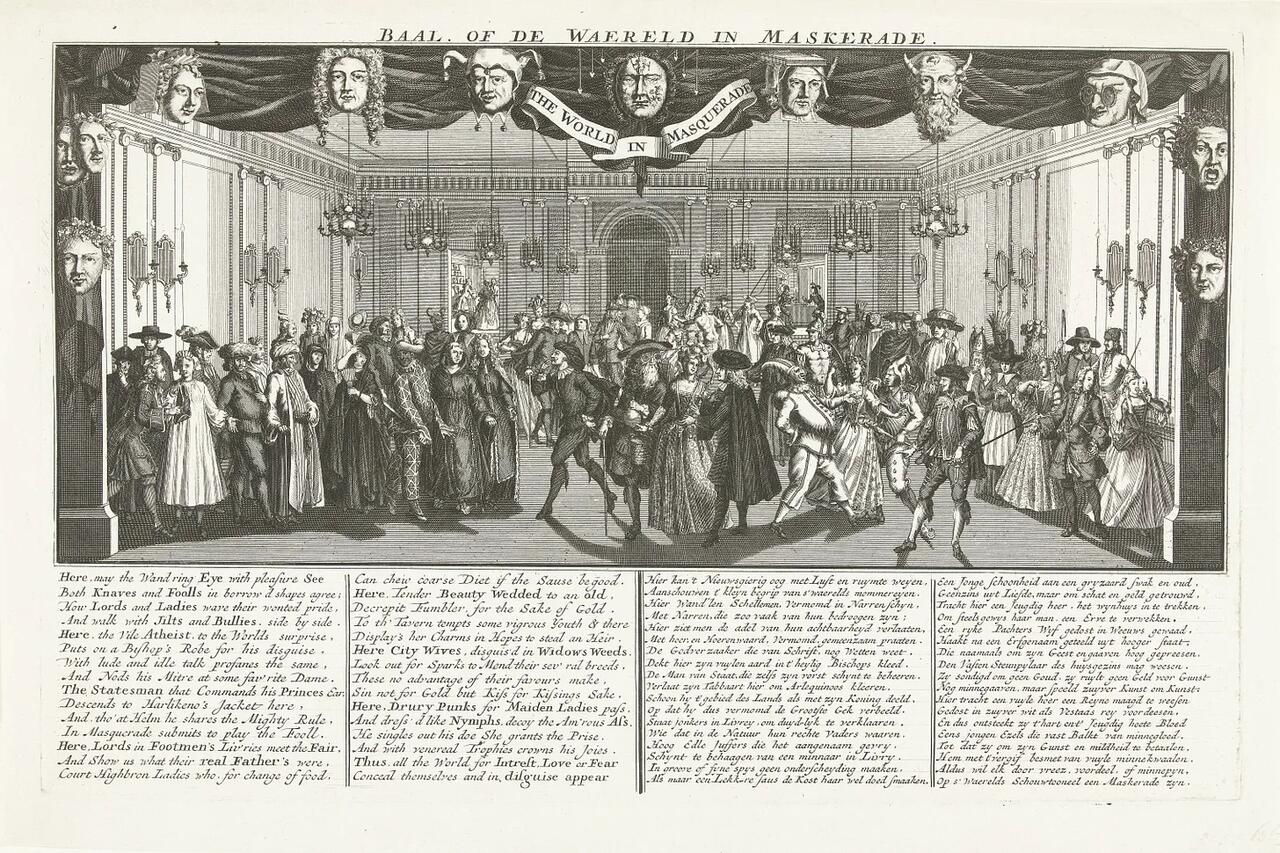
It is even now dawning on the citizenry that the “strong economy” and “record-setting stock market” are merely mirages conjured by the Financial Matrix—phantom metrics generated by and for the simulation. Meanwhile, in the ‘desert of the real,’ the productive have been treated as enemies, and “those who deal in favors” preside over a Witches’ Sabbath wherein swindlers parade as sages and vice dons the robes of virtue:
Here, corruption is rewarded and honesty has become a self-sacrifice—the laws no longer protect you against them, but protect them against you: “for my friends, everything; for my enemies, the law.”
Surrounding Cities Move In As Seattle Pulls Back On Drug Enforcement
A policy shift inside the Seattle Police Department is already generating unintended consequences — and they’re not the ones city leaders were hoping for, Jason Rantz of Seattle 770AM said in a new op-ed this week.
After Seattle Police Chief Shon Barnes told officers that most drug possession and use cases will once again be diverted away from prosecution and into the Law Enforcement Assisted Diversion (LEED) program, surrounding law-enforcement agencies moved quickly to capitalize on growing frustration inside SPD’s ranks. Pierce County Sheriff Keith Swank and the Marysville Police Department publicly began recruiting Seattle officers, using social media to pitch what they described as a more supportive environment for policing.
The Conservative commentator said Swank addressed Seattle officers and their union directly on X, telling them Pierce County “has a home for you,” promising strong leadership backing and community support.
Marysville’s police department quickly echoed the message, noting that it had already hired at least eight former SPD officers and highlighting its post-Blake municipal drug code and its own jail — features meant to signal that policing there still carries tangible authority and consequences.
Though the exchanges were framed humorously online, the message behind them was serious. According to the op-ed, Seattle’s renewed emphasis on diversion represents a return to policies that many officers believe stripped meaning from proactive policing.
While Barnes maintains that arrests can still be made, critics argue the system is structured to avoid real accountability by routing repeat drug offenders into a diversion program they view as ineffective and driven more by ideology than results.
The Seattle Police Officers Guild has repeatedly warned that such policies erode morale and compromise public safety. With overdose deaths and visible drug use still widespread, officers are being asked, the author argues, to enforce laws they know will rarely result in lasting consequences.
Other departments, meanwhile, are offering a simpler alternative: come work somewhere you are actually allowed to police.
Genetics may influence approximately 25 percent to 30 percent of how we age. The remaining portion is influenced by factors entirely within our control: what we eat, how we move, how we handle stress, others, and ourselves.
Lucia Aronica, a Stanford researcher specializing in epigenetics and nutrition, embodies this balance of nature and nurture.
After 17 years of epigenetic research, she sat down for an interview on my new show, “The Upgrade,” highlighting that: “You are not just a passive reader of your genetic code, but an active writer of your health story every day with every choice.”
Rewriting Your Software of Life
Aronica suggests that to understand epigenetics, we should view DNA as computer hardware—an unchangeable biological structure present in every cell—and epigenetics as the software that tells your cells which programs to run and when.
The prefix “epi” means “on top of,” referring to molecular switches that sit atop your genes, turning them on or off without altering the underlying code.
“Here’s the beautiful part: You can rewrite that software starting today,” Aronica said.
The first step? Food.
‘Food Is the Foundation of Everything’
Aronica grew up in Italy, where her mother taught her that “in the kitchen and at the dining table, you don’t get old.”
She calls her approach, “epi-nutrition,” a way of eating that focuses on specific foods that directly influence your epigenetics.
These foods act as more than just fuel and contain nutrients that can turn on the genes that make you healthy and turn off the genes that make you sick, she said.
The key players are methyl donors, nutrients that provide the chemical groups your body uses to regulate genes. They include:
Folate: From green leafy vegetables, liver, legumes
Vitamin B12: Mainly in meat, fish, shellfish, liver
Choline: Mostly egg yolks, liver, and some in cruciferous vegetables
Betaine: From beets, quinoa, shrimp, wheat bran
“Your doctor probably told you to eat the rainbow,” Aronica said. “But here’s what your doctor may not realize: those pigments aren’t just antioxidants. They are epi-nutrients that actually regulate the epigenetic writer and eraser enzymes, activating genes that boost your health.”
Therefore, make sure to eat:
Red Foods: Tomatoes, bell peppers
Orange Foods: Oranges, pumpkin, carrots
Brown Foods: Coffee, dark chocolate—greater than 80 percent and non–Dutch processed
Purple Foods: Berries
Green Foods: Spinach, cruciferous vegetables
In particular, green foods contain sulforaphane, which Aronica calls “the boss of your body’s own antioxidants.” Unlike other vitamins, which work directly and are depleted within hours, sulforaphane activates your body’s internal antioxidant genes, keeping them active for up to three days. Thus, eating cruciferous vegetables (broccoli, Brussels sprouts, arugula) two to three times a week, she said, is enough to “keep your genes happy.”
Rather than memorizing which foods to eat, following the Mediterranean diet offers a reliable template. A wide body of research has shown that adherence to the Mediterranean diet promotes positive gene regulation.
A 2020 study even found that older adults who followed a Mediterranean diet for one year showed signs of what researchers called “epigenetic rejuvenation.” Their gene-regulation shifted toward a younger, healthier profile.
The Body Remembers
Beyond nutrition, Aronica’s approach extends to movement, stress, connection, sleep, joy, and toxin avoidance, which she refers to as “epi-wellness.”
Research shows that even a single bout of high‑intensity exercise can cause immediate changes in gene regulation in your muscles. These kick‑starting processes help them adapt and become fitter.
However, the real benefits come from consistent exercise. A 2024 study comparing trained and untrained men found that years of regular exercise create a lasting “epigenetic fingerprint.” The genes controlling energy use and muscle fiber type become primed to respond more efficiently to each workout. At the epigenetic level, your muscles remember their training. The adaptation helps muscles perform better and develop greater endurance.
Perhaps most remarkably, exercise shifts the epigenome toward a younger biological age. A large meta-analysis of 3,176 human skeletal muscle samples found that people with higher aerobic fitness have younger epigenetic profiles.
Mindset on Epigenetics
“Our beliefs and our feelings shape our epigenetics,” Aronica said.
A systematic review of 18 studies on meditation and related practices, published in Frontiers in Immunology, found a consistent pattern: Mind-body interventions are associated with reduced NF-κB activity, a protein that acts as a master switch for inflammation. When NF-κB is chronically activated, it drives the production of inflammatory molecules linked to accelerated aging. The evidence suggests that meditation can help keep that switch in the “off” position.
Long-term meditators showDNA methylation changes associated with telomere length—the protective caps on chromosomes that shorten with age. Notably, age was not associated with telomere length in long-term meditators, suggesting that their practice may buffer against cellular aging.
A more recent 2025 systematic review found that meditation-based practices seem to reshape how our genes are “managed” in key stress and aging pathways, adding to the NF-κB and telomere findings.
In plain terms, regular mindfulness appears to tweak chemical tags on genes involved in inflammation, immunity, metabolism, and brain health, nudging them toward a pattern linked with lower stress and slower aging.
A Forgotten Variable
In the world of biohacking and longevity optimization, Aronica believes that many people jump from one health protocol to another, often sacrificing something essential in the process: joy.
“There is no sustainable change without joy,” she said. “You’re not going to stick to any lifestyle change, whether it’s food or exercise, if you don’t enjoy it.”
Our brain makes us repeat habits that are good for our health, such as nourishing food, connection, and movement, triggering authentic pleasure as it is “our ancestral compass for health.”
However, the problem with modern society, she said, is that joy is often hijacked by artificial pleasures rather than natural ones.
“I’m not telling you to eat a lot of chocolate or candies or just crawl on social media. That is, unfortunately, a type of addictive pleasure that you want to avoid.”
Aronica adds that once you detox yourself from addictive and artificial pleasures, you can find true pleasure that serves as the foundation for sustainable change. “Once you love and enjoy the food and exercise you do, you’re going to want to do it every day,” she said.
The Harvard Study of Adult Development, which has tracked participants for more than 80 years, arrives at a similar conclusion: The strongest predictor of healthy aging isn’t diet or exercise alone, but rather the quality of relationships and the presence of joy in daily life.
Wielding Your Genetic Pencil
Genes matter, but they are not the final verdict.
Aronica illustrates that “some [DNA] edits, like those made before we were born, are in pen, so tend to be permanent. But the edits we write as adults are in pencil—they can be erased and rewritten.”
Every meal, every workout, every meditation session, and every choice for joy represents an opportunity to pick up that epigenetic pencil and rewrite your health story.
Did Anyone Even Notice PBS News Weekend Signed Off Permanently...
"PBS News Weekend" signed off permanently on Sunday after 12 years on air. Did anyone actually notice?
The answer, quite frankly, is no, and this comes after Congress cut $1.1 billion in federal funding for public broadcasting over the Trump administration's view that the public broadcasting outlet was spewing left-wing propaganda.
"Due to federal budget cuts, PBS News had to make the difficult decision to rework our staffing and programming. This Sunday, our PBS News Weekend team will sign off the air," PBS News Weekend wrote on X.
Due to federal budget cuts, PBS News had to make the difficult decision to rework our staffing and programming.
Starting this weekend, PBS will replace the live newscasts with two pre-taped shows produced during the week to save money and eliminate weekend staffing. "Horizons" will air on Saturdays, covering science and technology, while "Compass Points" will air on Sundays, focusing on foreign affairs.
During Sunday's finale, anchor John Yang revealed the behind-the-scenes staff who will be laid off at the end of the month. A review of those staffers only suggests why news coverage skewed far to the left.
We identified seven reasons last year why the Corporation for Public Broadcasting, which administers funding for NPR radio stations and PBS TV affiliates, deserved to lose its $1.1 billion in federal support. Those included promoting drag shows, featuring the Marxist group BLM on Sesame Street, an obsession with Pride Month and gay dads, constant streams of left-wing bias, undermining the Covid lab leak narrative, and other examples that suggest PBS was acting less like a news outlet and more like a propaganda arm for left-wing interests.
"This is the first thing coming from NPR I've liked in 20 years," one X user said.
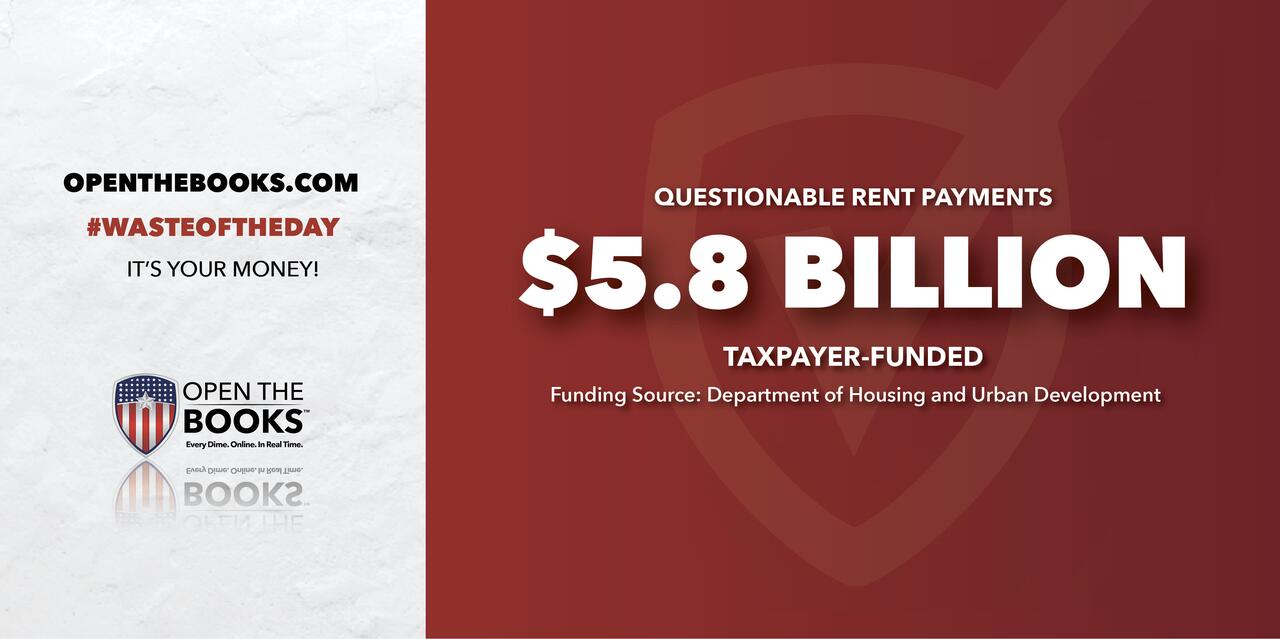
Topline: The federal government is unable to verify that $5.8 billion in rental assistance paid to more than 204,000 recipients in 2024 was not fraudulent, according to the Department of Housing and Urban Development’s latest annual report.
Key facts: HUD spent $15.2 billion on project-based rental assistance in 2024, which pays local housing authorities or private businesses and nonprofits to build affordable housing. That included $4.3 billion in “questionable payments” to nearly 113,000 groups that may have been ineligible for funding, according to the financial report — a mistake rate of over 26%.
HUD also gave $33.9 billion directly to families to help with rent payments, but the financial report claims $1.5 billion sent to almost 92,000 people was “questionable.” The estimates include $77 million paid to 29,715 dead people and $150.3 million paid to 9,472 people with invalid Social Security numbers.
But most of the flagged payments — $5.2 billion — were sent to people or businesses with inactive registrations in the System for Award Management. The federal government is generally not supposed to pay money to anyone not registered on SAM.gov. The online platform allows officials to ensure that a business is legitimate, not a fictional company trying to steal money from the government.
Most of the recipients that did not register on SAM.gov were likely legitimate businesses that mistakenly did not follow federal procedure, not organized criminals intentionally breaking the law. Contrary to viral claims on social media, the payments are not all known to be fraudulent.
Still, HUD would have been able to better screen applicants if it was using the Treasury’s Do Not Pay list, which tracks entities with missing paperwork, debt to the government, a history of fraud and more.
The software agreement that gave HUD access to the list expired in 2019, during President Donald Trump’s first term. It remained inactive throughout Joe Biden’s time as president and was not renewed until May 2025, according to HUD’s inspector general, who blamed both presidents for “weak governance around Do Not Pay implementation” in a May 2025 report.
In 2024, HUD sent $212 million to 11 entities on the Do Not Pay list, the inspector general found.
Search all federal, state and local salaries and vendor spending with the world’s largest government spending database at OpenTheBooks.com.
Background: In its latest financial report, HUD relied on what it called “innovative methods and advanced analytics” to analyze millions of payment records, unlike past audits that use a sample of a few hundred records.
HUD also announced it will publish full estimates of improper payments from its two largest rental assistance programs, as required by the Payment Integrity Information Act of 2019. The estimates have never been completed because of “a lack of necessary data, no effective technology platform for collecting supporting documentation, and unsuccessful attempts to manually review information,” according to the financial report.
Limited estimates released in 2024 identified just $45 million in unknown payments from HUD’s rental assistance programs.
Summary: Every oversight gap in safety net programs makes it more difficult to ensure public funds are reaching the people who are legally entitled to them.
The #WasteOfTheDay is brought to you by the forensic auditors at OpenTheBooks.com
Reaching 120 & Beyond: Musk Makes Stunning Longevity Claim
Elon Musk says “semi-immortality is an extremely solvable problem,” and that in hindsight, the solution will seem obvious.
As The Vigilant Fox reports, reaching 120 and beyond, Musk believes, is simply a matter of “changing the program.”
“When you consider the fact that your body is extremely synchronized in its age, the clock must be incredibly obvious. Nobody has an old left arm and a young right arm. Why is that?” Musk said.
He added:
“What’s keeping them all in sync? You’re pre-programmed to die. And so if you change the program, you will live longer.”
However, Musk said he is not interested in immortality:
Вчера в поисках сыниных таблеток оказалась в отдаленной аптеке, и пока ждала такси внутри (снаружи был ппц дубак) - увидела, какие там стоят шкафчики. Прям музей.
Прочитал что один россиянин нопейсал в Threads: "Вот мне очень интересно, что происходит. Страна фактически в военном положении, налоги открыто уходят на СВО, над городами массово снуют дроны, сотни тысяч человек воюют, сотни тысяч лежат в гробах. Экономика задыхается, цены в магазинах совершенно не соизмеримы с зарплатами, если до войны вы зарабатывали 150 тысяч, то на это можно было скромно, но содержать семью, сейчас надо зарабатывать 300. Где такие зп взять? За 4 года массово развалился малый бизнес. Куча народу была сокращена, работодатель прямо обманывает на каждой второй работе в целях экономии на сотруднике. И в столь сложнейшее для страны время народ должен был сплотиться. Миллиардеры из Магнита и Пятерочки могли держать цены, а не отправлять их в космос, работодатели - наоборот максимально честно начать относиться к сотрудникам, а все граждане стать просто намного спокойнее и добрее друг к другу, т.к. мы все в одной лодке и это почти "железный занавес". По телевизору 24/7 твердят, что мы великая страна, что у нас самый добрый, честный и отзывчивый народ, может там про другую страну говорят просто? Когда на пороге такая жопень, которая наступает уже сейчас - нужно скорее сплотиться, либо - перебьют по одиночке, как это донести до русского человека - тут даже Соловьев бессилен."
Я не понял, только русским надо сплотиться вокруг лидера? Татарам, башкирам, чувашам, якутам можно покурить в сторонке?
An anonymous reader quotes a report from the Guardian: High-profile studies reporting the presence of microplastics throughout the human body have been thrown into doubt by scientists who say the discoveries are probably the result of contamination and false positives. One chemist called the concerns "a bombshell." Studies claiming to have revealed micro and nanoplastics in the brain, testes, placentas, arteries and elsewhere were reported by media across the world, including the Guardian.
There is no doubt that plastic pollution of the natural world is ubiquitous, and present in the food and drink we consume and the air we breathe. But the health damage potentially caused by microplastics and the chemicals they contain is unclear, and an explosion of research has taken off in this area in recent years. However, micro- and nanoplastic particles are tiny and at the limit of today's analytical techniques, especially in human tissue. There is no suggestion of malpractice, but researchers told the Guardian of their concern that the race to publish results, in some cases by groups with limited analytical expertise, has led to rushed results and routine scientific checks sometimes being overlooked.
The Guardian has identified seven studies that have been challenged by researchers publishing criticism in the respective journals, while a recent analysis listed 18 studies that it said had not considered that some human tissue can produce measurements easily confused with the signal given by common plastics. There is an increasing international focus on the need to control plastic pollution but faulty evidence on the level of microplastics in humans could lead to misguided regulations and policies, which is dangerous, researchers say. It could also help lobbyists for the plastics industry to dismiss real concerns by claiming they are unfounded. While researchers say analytical techniques are improving rapidly, the doubts over recent high-profile studies also raise the questions of what is really known today and how concerned people should be about microplastics in their bodies.
"Since the United States reopened its embassy in Cuba in 2015, a number of personnel have reported a series of debilitating medical ailments which include dizziness, fatigue, problems with memory, and impaired vision," writes longtime Slashdot reader smooth wombat. "For ten years, these sudden and unexplained onsets have been studied with no conclusive evidence one way or the other. Now comes word that a device, purchased by the Pentagon, has been tested which may be linked to what is known as Havana Syndrome." From a report: A division of the Department of Homeland Security, Homeland Security Investigations, purchased the device for millions of dollars in the waning days of the Biden administration, using funding provided by the Defense Department, according to two of the sources. Officials paid âoeeight figuresâ for the device, these people said, declining to offer a more specific number. [...]
The device acquired by HSI produces pulsed radio waves, one of the sources said, which some officials and academics have speculated for years could be the cause of the incidents. Although the device is not entirely Russian in origin, it contains Russian components, this person added. Officials have long struggled to understand how a device powerful enough to cause the kind of damage some victims have reported could be made portable; that remains a core question, according to one of the sources briefed on the device. The device could fit in a backpack, this person said.
[...] One key concern now for some officials is that if the technology proves viable it may have proliferated, several of the sources said, meaning that more than one country could now have access to a device that may be capable of causing career-ending injuries to US officials. Further reading: 'Havana Syndrome' Debate Rises Again in US Government
Ребёнок сошёл с ума (ну или нас решил с него свести). Мало ему было школьных клубов, спортивных тренировок, испанского, дополнительных занятий, работы, так он еще подписался на Quizbowl и в марафонский клуб. Причём последние два начинаются в 6 утра в будние дни и в 7:30 в выходные. Я спать хочу!
Мироздание, пусть он уже отучится на права и возит сам себя!
Когда ЖЖ только начинался, среднему пользователю было около 30-ти. Это значит, что перекочевавшим на DW сейчас уже за 50, а к середине века им будет под 80.
Сколько тогда будет знаний, опыта, мудрости в постах и комментариях — даже не берусь загадывать.
Newsom Scrambles To Keep Billionaires In California, Vows To Kill Wealth Tax
After a swath of billionaires publicly announced they are leaving the state of California over a proposed wealth tax, Governor Gavin Newsom went into a full blown panic - vowing to stop the proposed tax and "do what I have to do to protect the state."
In an interview with the NY Times, Newsom said that he has been working 'relentlessly' behind the scenes to kill the proposal.
"This will be defeated — there’s no question in my mind," he said of the measure he has long opposed over concerns that it would stifle innovation in the state - as a growing list of tech CEOs have thrown their hands in the air and rage-quit the state over mounting plans to separate them from their wealth.
The plan in question - being driven by the SEIU-United Healthcare Workers West union - would require Californians with a net worth north of $1 billion to pay a one-time tax equal to 5% of their assets, and would apply retroactively to anyone who was living in the state as of Jan 1. Affected taxpayers could spread their payments across five years beginning in 2027.
According to the union, the tax is necessary to make up for deep cuts to health care signed into law last year by President Trump - which include reductions in Medicaid, ACA subsidies, and food subsidies. The union is demanding that California spend 90% of the new tax money on health care, with the rest devoted to food assistance and education.
The union's Chief-of-Staff, Suzanne Jimenez told the Times; "The governor is focused on the wrong problem here," adding "The problem is not just about the preferences of 200 ultrawealthy individuals. The problem is millions will lose health care, and that’s really the problem we’re trying to solve."
California is on a path to self-destruction. Hollywood is already toast and now the most productive entrepreneurs will leave taking their tax revenues and job creation elsewhere.
The state's nonpartisan Department of Finance warned in a joint review that the tax would likely deliver tens of billions of dollars in one-time funds for the state, but it could lead to hundreds of millions or more in annual losses from billionaires leaving to avoid the tax.
Notable billionaires who have left California or announced plans to leave include:
"This is what I feared, and it’s come true," Newsom told the Times.
Even Reid Hoffman, co-founder of LinkedIn and a Democratic mega-donor who funds questionable left-wing causes, called out S.E.I.U.-U.H.W's proposed billionaire tax. He wrote on X that this is a "horrendous idea" that might force tech founders and executives to flee the state.
"The proposed CA wealth tax is badly designed in so many ways that a simple social post cannot cover all of the massive flaws. One well-documented example is the horrendous idea to tax illiquid stock in the proposal. Poorly designed taxes incentivize avoidance, capital flight, and distortions that ultimately raise less revenue," Hoffman wrote on X earlier this week.
Meanwhile, business leaders across the state are raising money to oppose the wealth tax - setting the stage for a serious showdown if it reaches the ballot.
According to Ron Lapsley, president of the California Business Roundtable, the proposal "would undermine our economy, decimate the state budget, drive investment out of the state and ultimately make everyday life more expensive for working families."
Supporters of the tax, on the other hand, have begun collecting the nearly 900,000 signatures they'll need to place the measure on the ballot.
Egypt's armed forces in December rejected government pleas to help ease the debt crisis despite holding more than Egypt's total foreign debt in secret reserves, senior banking and government officials told Middle East Eye. The claims underscore mounting concerns over the opaque role of Egypt’s military in the economy at a moment of acute fiscal stress, as the government struggles to meet debt obligations amid shrinking foreign currency reserves and tightening domestic liquidity.
Egypt was expected to pay about $750m in loan repayments to the International Monetary Fund (IMF) by the end of December but failed to meet the deadline. As a last resort, it was agreed "in principle" for the instalment to be deducted from Egypt’s upcoming IMF tranche, with interest added, official banking sources told MEE.
However, the precise terms of the arrangement remain unclear, with both the Egyptian government and the IMF keeping the details out of the public domain. "The government sought to borrow three trillion Egyptian pounds ($63.7bn) by December, but domestic banks refused, citing limited liquidity," a senior banking official said, speaking on condition of anonymity for security concerns. "With no other borrowing options available, the government turned to the armed forces."
The official added that the head of the military’s Financial and Administrative Authority rejected the request, even after the issue was raised with the defense minister.
"Prime Minister Mostafa Madbouly in December called Minister of Defence Abdel-Megeed Saqr, urging him to help cover the latest IMF loan instalment, but the plea was firmly refused," the official, who spoke to MEE in late December, added.
It was not clear why Madbouly did not extend the same request to President Abdel Fattah el-Sisi, who is the supreme commander of the armed forces and who is presumed to have direct control over the reserves. Egypt’s debt obligations to the IMF include SDR 264 million ($377.8m) in December and SDR 194 million ($277.6m) in January.* Broader external debt obligations for the year 2025 exceeded $60bn.
The banking official also claimed that the country’s military holds a sizable amount of dollar reserves, which are inaccessible to civilian authorities. The official provided an estimate that exceeds Egypt’s total external debt of $161bn. MEE is not citing the exact amount because it could not independently corroborate the banker’s information.
The senior banker, who has direct oversight of government accounts, claimed that the military funds are "real and physically held" inside the country’s two main state-run banks, the National Bank of Egypt and Banque Misr, yet "remain entirely beyond the reach of civilian authorities".
“These funds are physically held in Egyptian banks and it is impossible to dispose of them or use them to repay debts," the official told MEE.
The official argued that the military apparatus could "theoretically" cover Egypt’s external and domestic debts and resolve the ongoing hard-currency crisis, but would not relinquish control of the economy. According to the official, the exact volume of military projects and details about the funds remain off limits and are subject to no oversight, known only to President Sisi and the army's top brass.
An Egyptian presidential source also cited a similar number, and confirmed the presence of army deposits in the two banks, without elaborating further. This is a significant allegation that shines a light on the opaque nature of the Egyptian army’s financial resources.
Egyptian banks do not provide details of clients to the press. The Egyptian army does not disclose the military’s financial records, which remain beyond civilian oversight.
In November, local banks extended 1.5 trillion Egyptian pounds to the government to cover more than $350m in loan instalments, leaving little room for further lending. Madbouly in late December told reporters at a press conference that his government was due to “reduce debts to unprecedented levels” by the end of the year.
State-affiliated media meanwhile floated the idea that a “surprise” and “bombshell” announcement would be made by the prime minister “within days” with respect to the reduction of debts. But no major announcements in this regard were made by the end of the year.
Previous interventions
The banking official told MEE that the armed forces intervened financially during a severe dollar shortage in 2022 that left imported goods stuck offshore because importers could not access the hard currency needed to pay port fees.
“At the time, the military injected $10 billion to resolve the crisis, a move the prime minister publicly framed as an emergency measure, though he only hinted at the army’s intervention without direct mention,” the senior official recalled. “Repeated proposals for the military to contribute to repaying Egypt’s mounting external debt, or even a small portion, were firmly rejected. Officials were instructed not to raise the issue again under any circumstances,” the official added.
“This stance persists even though a significant portion of Egypt’s debt burden is linked to arms purchases or investments from which the military has financially benefited,” the official explained. “Even suggestions that the armed forces should repay loans taken out in their own name were dismissed,” they explained.
A troubling chart from Egypt. The graph shows Egypt’s savings-to-GDP ratio, decimated by inflation, pound devaluation, and falling real wages. pic.twitter.com/1YbjY6YFgQ
A second senior official at a state bank, familiar with discussions around the debt crisis, told MEE that “the military had rejected repeated proposals to contribute, even partially, to Egypt’s external debt repayments, including offers for the armed forces to pay down loans taken in their own name.”
“Every time the idea was floated that the military could help with debt, even by covering its own obligations, it was shut down,” the second official added.
Gold revenues
The military’s grip on the Egyptian economy dates back to the mid-20th century, following the July 1952 revolution, when army officers overthrew the monarchy. Its economic role expanded significantly after the 2011 uprising, when the Supreme Council of the Armed Forces (SCAF) assumed control following the ouster of long-time autocrat Hosni Mubarak.
The situation intensified under President Sisi, who assumed power in 2014 after leading a coup that removed Egypt’s first democratically elected civilian president, Mohamed Morsi. Since then, the military has steadily expanded its presence in construction, agriculture, and other civilian sectors, justifying its reach as a means to deliver major national projects and secure economic stability.
The military’s revenues, which are not subject to civilian oversight, have been driven by a vast network of companies and investments operating across nearly every sector of the economy, with military-owned firms dominating much of Egypt’s import and export activity and generating substantial profits.
Additional income comes from land sales, real estate projects, and large-scale infrastructure schemes, including toll gates on major highways, whose daily revenues, amounting to millions of pounds, are channeled directly into military accounts. “Almost all aspects of the country’s economy are now controlled by the military,” the first senior banking official said.
“The military carries out multi-billion-dollar imports of strategic and essential goods, which are then supplied to the government at a profit,” the official added. “The proceeds flow directly into military-controlled bank accounts that civilian authorities cannot access.”
Even when the state faces acute cash shortages, the official said, government borrowing remains entirely separate from military holdings. The armed forces are the only entity permitted to export certain goods, including rice, despite a government ban on its export. The Egyptian army is also believed to control about 50 percent of the gold industry, the official said.
A 2014 law grants the Ministry of Defense authority to approve mineral exploitation and levy fees on all mining operations, with the overwhelming majority of extraction sites in military-controlled zones.
Together, these exports generate hundreds of millions of dollars each month, the official said, all deposited directly into military accounts. Military-owned and state-run firms benefit from tax exemptions, access to prime land, and army conscripts as cheap labour, all while operating with very limited financial transparency.
“Keep in mind that the military receives 50 percent of the output from Egyptian gold mines, with the proceeds going directly to it,” said the source. “This is important because it represents a significant contributor to the military’s dollar-denominated income.
“The value of gold revenues accruing to the armed forces is approximately $500 million annually. This is in addition to the importation of raw gold, its reprocessing, and re-export, which generates revenues amounting to billions of dollars annually. “The military is, of course, the entity responsible for deciding on or directly importing gold, whether directly or through intermediaries. In both cases, it is the beneficiary.”
In July, the IMF warned in a damning report that Egypt’s military-controlled economic model is crippling private sector growth, deterring investors, and keeping the country in a cycle of debt and underperformance.
The international lender also noted that military-owned firms continue to enjoy “preferential treatment,” including tax breaks, cheap land, and privileged access to credit and public contracts.
On December 23, the IMF said it had reached the staff-level agreement with Egypt on the fifth and sixth reviews of its Extended Fund Facility, a move that could unlock around $2.5bn in new financing, alongside a further $1.3bn under the fund’s Resilience and Sustainability Facility, pending approval by the IMF’s executive board.
The reviews were combined to give Egyptian authorities more time to meet key programme targets under the expanded $8bn loan agreed in March 2024, which was designed to stabilise an economy hit by high inflation and foreign-currency shortages. While the IMF said recent stabilization efforts had delivered gains, it reiterated that structural reforms, particularly the divestment of state-owned assets and a reduction in the state’s role in the economy, must be accelerated.
*Special Drawing Rights (SDRs) are IMF reserve units that act like a common “value measure” countries use and can be swapped into real currency when needed (SDR = $1.43 on 13 January).
Recent turmoil in Venezuela and Iran has again put the spotlight on the duality of stablecoins, with the US dollar-backed assets such as Tether acting as both a savior for embattled citizens and a tool for blacklisted entities to evade sanctions.
Both Venezuela and Iran have been catching headlines at the beginning of 2026 amid political uncertainty and civil unrest. With both facing a host of sanctions, inflation, political instability, and a cost-of-living crisis, crypto and stablecoins have become an important part of the ecosystem.
Iran’s stablecoin entanglement
Iran has seen protests erupt across the country over the past two weeks in response to worsening economic conditions and the Iranian rial tanking to record lows against the US dollar.
The situation has escalated from local demonstrations to widespread protests across Iran, with thousands arrested and hundreds reportedly killed. Amid this backdrop, the Iranian government also moved to cut off domestic internet access on Thursday.
Crypto and stablecoins have become an important tool for citizens in Iran, given that the Iranian rial has been plummeting in value against the US dollar for decades.
Tron-based Tether (USDT) is reportedly the most utilized asset in the country, with citizens using the asset to hedge inflation and systemic risk.
Broader adoption took a hit in 2025, however, with a hack on the country’s biggest exchange and a significant number of Tether blacklistings. Meanwhile, the government also set an annual limit on stablecoins in late September, allowing citizens max holdings of $10,000 and max purchases of per person $5,000.
But stablecoins have also been used by sanctioned entities. A report from blockchain analytics firm TRM Labs on Friday indicates that since 2023, Iran’s Islamic Revolutionary Guard Corps (IRGC) has allegedly moved over a $1 billion worth of stablecoins via two “UK-based front companies” called Zedcex and Zedxion.
The report claimed that despite the two firms publicly presenting themselves as individual firms, they have been quietly functioning together “as financial infrastructure for the IRGC.”
“In practice, they operate as a single enterprise embedded within a broader Iranian sanctions evasion ecosystem, moving value across borders, currencies, and jurisdictions on behalf of one of the world’s most heavily sanctioned military organizations,” TRM Labs said.
“A key figure in this network is Babak Zanjani, a longtime Iranian sanctions-evasion financier previously sanctioned for laundering billions in oil revenue on behalf of regime entities, including the IRGC,” TRM Labs added.
Venezuela is closely entwined with USDT
Similar to Iranians, Venezuelans have also adopted USDT to protect themselves against economic uncertainty, as the Venezuelan bolivar has plummeted over the past decade.
A severe lack of trust in banks has reportedly seen USDT so widely adopted that everyday people use the asset to pay for all kinds of everyday services, opting to set up crypto wallets instead of using bank accounts.
“It’s how you pay your landscaper and how you pay for your haircut. You can use tether basically for anything,” 71-year-old Venezuelan crypto entrepreneur Mauricio Di Bartolomeo told the Wall Street Journal on Saturday, adding:
“Stablecoin adoption has gone so far into Venezuela that even without having regulated venues where you can buy and sell them, people still choose to go for stablecoins as opposed to using the local banks.”
The WSJ also highlighted that USDT is highly utilized by Venezuela’s state-run oil company, Petroleos de Venezuela. The firm reportedly started demanding payments directly in the stablecoin to avoid sanctions that were first imposed back in 2020.
The company is estimated to accept 80% of all its oil revenue via Tether and frequently uses the asset to settle incoming and outgoing payments.
Tether uses blacklists to fight sanction evaders
The WSJ report adds that Tether has been fighting this by cooperating with the US government to blacklist “dozens of wallets” tied to the domestic oil trade.
According to data compiled in a Dec. 5 report from AMLBot, Tether blacklisted around $3.3 billion worth of funds between 2023 and late 2025, with $1.75 billion of that sum being frozen Tron-based USDT.
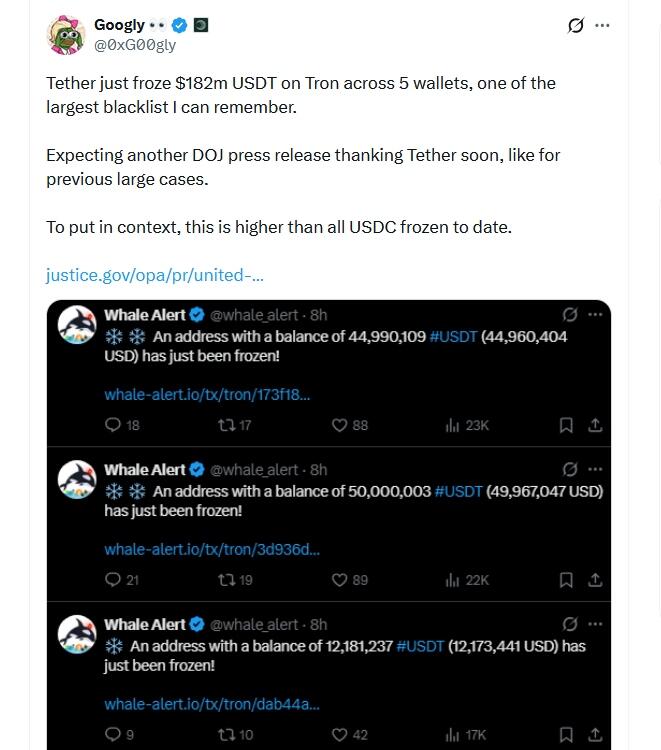
Over the weekend, the firm reportedly added to the figure by freezing $182 million worth of Tron-based USDT across five wallets; however, this has not been confirmed to be related to Venezuela or Iran.
South Korea Seeks Death Penalty For Ex-President Yoon's Botched Martial Law Attempt
South Korea's special prosecutor has called for the death sentence for former President Yoon Suk-yeol in his rebellion trial, according to Yonhap. Closing arguments have been made in his trial in a Seoul court as he stands accused of being the "ringleader of an insurrection".
Yoon's botched attempt in December 2024 to impose martial law in South Korea lasted a mere hours but plunged the country into political turmoil and chaos. He was soon after impeached from office by parliament and was arrested pending trial.
Seeking the death penalty seems ultra-harsh, but it's actually in keeping with South Korean criminal code, under which leading a rebellion carries three possible penalties: capital punishment, life imprisonment with hard labor, or life imprisonment without compulsory labor.
Prosecutors allege that he ordered military and police forces to seal off the National Assembly in an effort to prevent lawmakers from entering the building where they would overturn the martial law decree.
Importantly, South Korea has not carried out an execution since 1997 - so if Yoon is eventually executed (though would likely be some kind of drawn out appeals process), it would send a chilling and strong message to current and future leaders.
In 1996, ex-President Chun Doo-hwan, who ruled from 1980 to 1988, was sentenced to death for rebellion, high treason, and corruption stemming from his role in the 1979 military coup and the violent suppression of the Gwangju uprising in 1980.
His sentence was later commuted to life imprisonment by appellate courts, including the Supreme Court. He was ultimately pardoned in 1997 by then-President Kim Young-sam as part of a 'national reconciliation' initiative.
And in the years running into the 2010s there was this litany:
Chun's successor, Roh Tae-woo, was also tried in 1996 on charges of rebellion and corruption. He initially received a 22-year prison sentence, which was later reduced to 17 and a half years. Like Chun, Roh was pardoned in 1997.
Former President Lee Myung-bak, who served from 2008 to 2013, was convicted of corruption and abuse of power and sentenced to 15 years in prison. He was later pardoned in 2022 by President Yoon Suk-yeol.
President Park Geun-hye, who held office from 2013 to 2017, was impeached, as was Yoon Suk-yeol. In 2018, she received a 24-year prison sentence on corruption charges, before being pardoned in 2021 by President Moon Jae-in.
This is why, after the South Korean political system had somewhat stabilized in the last several years compared to over two decades ago, Yoon's declaration of martial law was such a shock to Koreans, and to the West.
Amnesty International condemns it...
No one is above the law, but seeking the death penalty for former South Korean President Yoon Suk Yeol is a step backward.https://t.co/x9flcVi10x
Prosecutors in their arguments have alleged the former president had been motivated by a "lust for power aimed at dictatorship and long-term rule". They told the court: "The greatest victims of the insurrection in this case are the people of this country," they told the court.
"There are no mitigating circumstances to be considered in sentencing, and instead a severe punishment must be imposed," the prosecutors said.
![[personal profile]](https://www.dreamwidth.org/img/silk/identity/user.png) ccpro
ccpro


![[syndicated profile]](https://www.dreamwidth.org/img/silk/identity/feed.png)